Integrate once.
Comply everywhere, automatically.
One integration keeps your game compliant across 200+ jurisdictions without gating out players, forking builds, or re-engineering at every rule change.




Leading game studios build on k-ID
Verified changes to youth-safety rules, tracked across k-ID's regulatory database in the past six months. Each requires a product change.

Source: neimo. by k-ID, Aug 2026

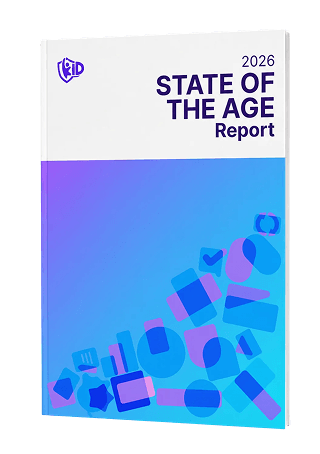
State of The Age Report: The Regulatory Landscape
k-ID’s State of the Age Report tracks the shift market by market. Get the data behind everything on this report.


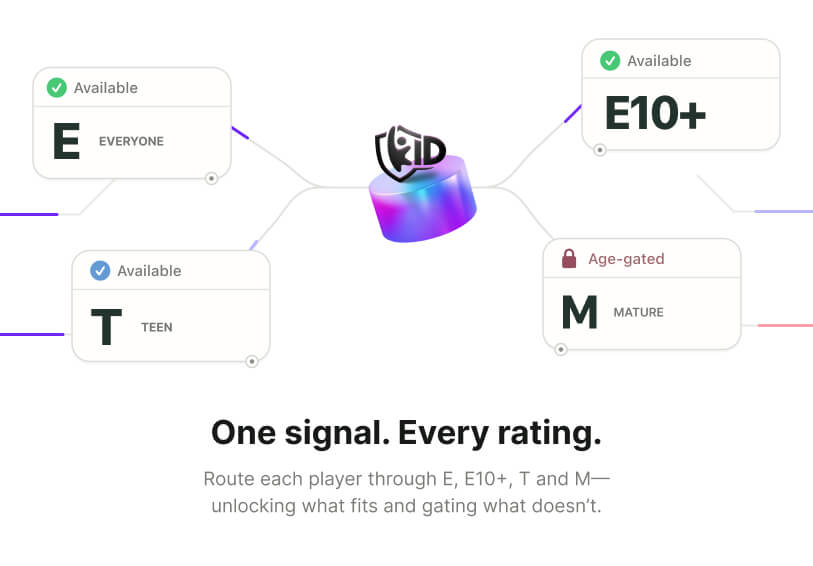
Age, not identity
Establishes each player’s age band without learning who they are. No identity profile, no stored documents.
The right assurance method per player and market.
Players verify once, not per game without costing you the signup.

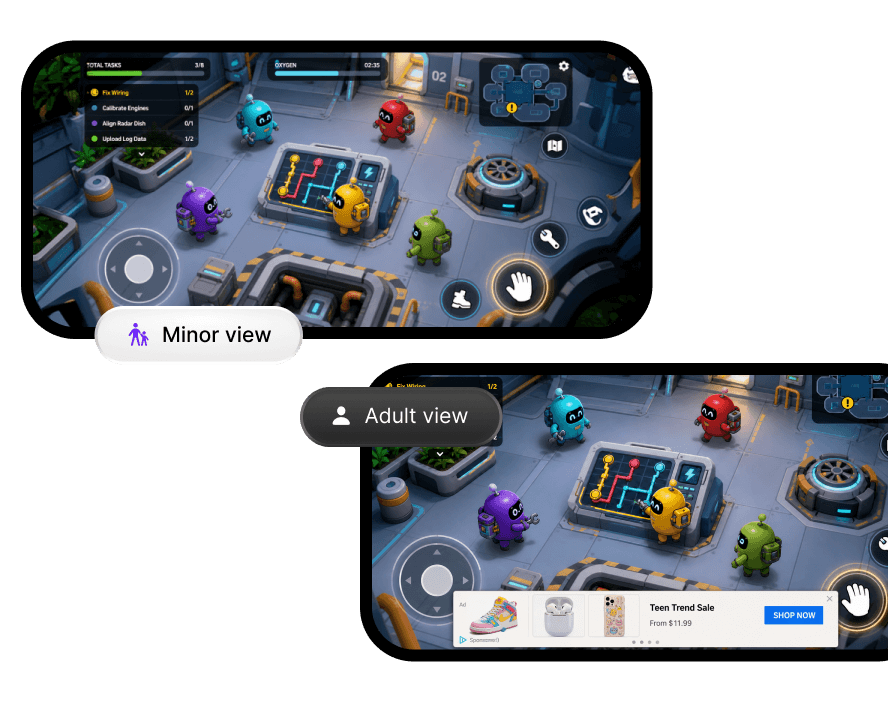
Adapt features to local laws in-game automatically
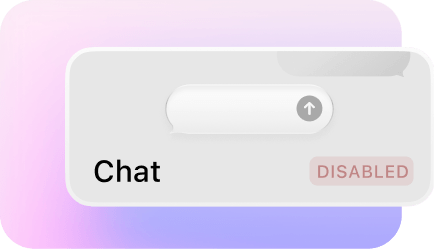
Verification and age-adaptive experience: the age signal drives what the game does (loot boxes, chat, social, spend, ads).
Feature-flagged and jurisdiction-aware at runtime.
No engine fork, no separate builds, nothing to redeploy when rules change.

Check compliance while you build
Regulatory intelligence across 200+ jurisdictions, continuously updated.
Installs into the AI dev tools your team already uses.
From “what does this market require?” to a checklist from your code before the roadmap slips.

One-time Consent that converts everywhere
Verifiable parental consent at portfolio scale.
Consent flows designed so parents actually complete them.
One consent relationship carried across your titles.

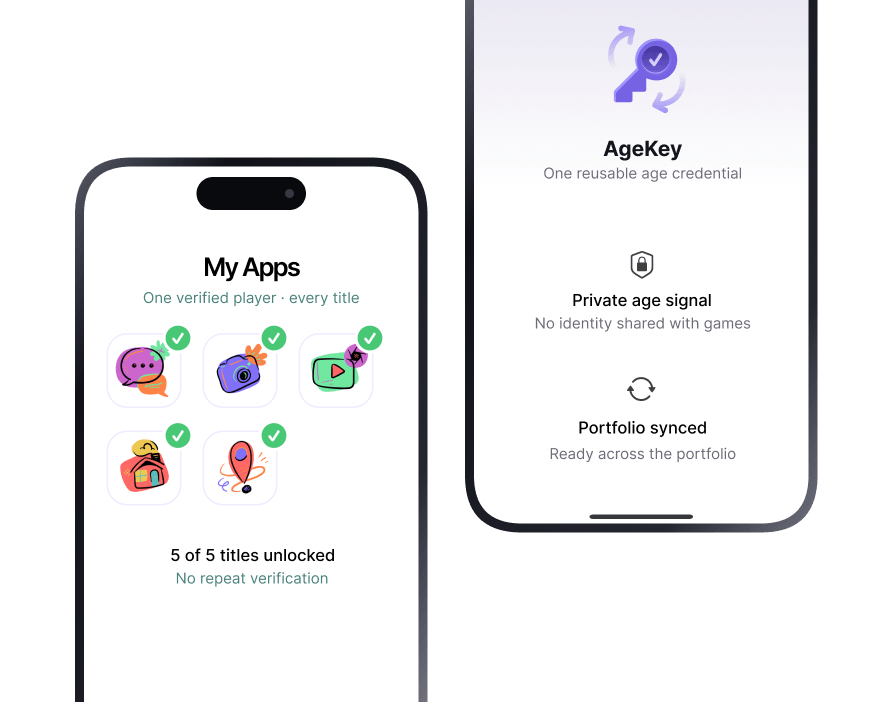
A standards-based, reusable age credential. Players carry their verification with them across the web.


State of the Age Supplemental - Brazil
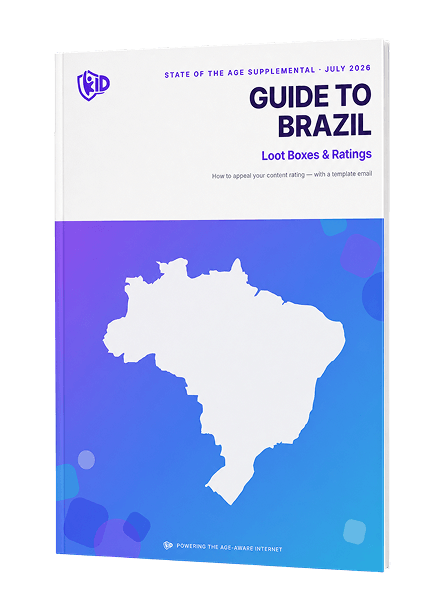
Brazil's ECA Digital has pushed games with paid loot boxes to an 18+ rating on Brazilian storefronts since March 2026, which is cutting off the under-18 players many titles were built for. There's a path back, including a ready-to-send appeal template.


Try neimo free in your favorite AI tool to check your compliance. Integrate in one title and easily expand from there.

Stop being the department of "no". Hand your product team a way to ship with audit-ready, per-market evidence behind every enforcement decision.
Don’t become a compliance engineering shop. Standards-based CDK and reusable AgeKey credentials. Integrate once instead of having to maintain a rules engine forever.
Ship regulatory changes behind feature flags, tested like any other release. They are age-aware by market, not age-gated out of your funnel.
Start compliant. neimo in your dev tools from the first sprint; one jurisdiction-aware codebase from day one. Retrofit is something other studios do.
Protect revenue and time-to-market in every regulated market. Get the moat your board, platform holders, and acquirers ask about.
“Placeholder testimonial — a one-line quote about shipping age-aware without losing the funnel.”
— Product leadership, a top studio
"Our underlying commitment hasn't changed," Emans said. "Working with k-ID helps us continue evolving those experiences alongside changing industry standards and regulatory expectations while maintaining an experience that feels seamless for the vast majority of players."
– Joel Emans, Vice President of Legal at Wizards of the Coast (Hasbro)


"Our brand is all about parent-trusted and kid-friendly. So we have a lot of features that parents control to make the game age appropriate. For example we use k-ID to switch the voicechat to monkey-chat based on age - so all kids hear is monkey sounds from strangers..."
– Jake Zim, Chief Marketing Officer Another Axiom

Point neimo at your game from the AI tools your team already uses. Get a market-by-market report and checklist for the features you actually ship (monetization, chat, UGC, social) before your next launch or expansion.
Subscribe to k-ID's Compliance Watch newsletter
k-ID for gaming is age-aware product infrastructure: one integration that lets your game recognize a player's age band (however each jurisdiction defines it) and craft an age-appropriate and compliant experience accordingly. It combines AgeKit+ privacy-preserving age assurance, CDK feature-level product adaptation across 200+ jurisdictions, Family Connect parental consent, and neimo regulatory intelligence; the same human-expert curated real-time regulatory platform used by leading game studios and consumer platforms worldwide.
While k-ID’s solutions for gaming are designed to be a turnkey single integration to resolve all of your studio’s age-compliance needs, each product can also be used on its own within your existing compliance stack.
This is the first question most product teams ask, and it's the right one. k-ID is designed by industry veterans to make age-adaptive experience; not simply age gates. Our technology is designed to allow every player to get the right experience for them, rather than simply gating entire groups out of the experience. Assurance methods are matched to each market and player, so friction is applied only where a jurisdiction actually requires it, and enforcement happens using feature flags so your team can test it like any other release. Studios have shipped k-ID across live, scaled titles; ask us for the funnel data when you talk to us — book a demo and we'll walk through how comparable studios rolled it out.
One integration, and your team stays in control: you tell k-ID what your features do, and the platform resolves who can use them, per player, per market, at runtime. You own how your game behaves for each age band; k-ID keeps those decisions current as rules change — no separate regional builds, nothing to redeploy. Scope varies with your stack (account systems, platforms, how many titles) how many different jurisdictions your players live in, and whether you’re retrofitting an existing game or starting from scratch. So rather than quote a number here: talk to a k-ID solutions engineer, who will map the integration against your actual architecture before you commit to anything.
Building a feature-flagging system is tricky but certainly doable. The harder question is maintaining it: age thresholds, consent rules, and feature restrictions change continuously across 200+ jurisdictions, and every change becomes an engineering ticket your roadmap absorbs — forever. k-ID creates a live compliance infrastructure, so your team doesn’t have to spend all its time playing catch-up with an ever-evolving web of new laws. Before deciding, run a free neimo check — seeing what actually applies to your features across your markets is the fastest way to scope what "build it ourselves" really means.
The test of any compliance system isn't day one; it's what happens when the rules change. If every new regulation means re-engineering, hardcoded rule changes, or waiting on a vendor's backlog, the cost isn't the tool, it's the impact on your roadmap. k-ID resolves rules at runtime and updates continuously, so regulatory changes don’t require constant client updates. If you're evaluating a move, we'll map a migration path alongside your current setup — book a demo and bring your hardest jurisdiction.
As a subscription scaled to your usage — not a per-verification-check, which is the model that punishes you for having players. Tiers cover single titles through full portfolios, and the whole stack (assurance, enforcement, consent, regulatory intelligence) is priced as a platform rather than à la carte checks. Because it's scoped to your MAU footprint and titles, contact sales for a quote scoped to your portfolio.
k-ID’s AgeKit+ establishes age, not identity. All verification documents and evidence is checked by the verification provider, and k-ID only gets the results of the check. Age signals are privacy-preserving by design, and reusable AgeKey credentials mean a player can prove their age band without handing over who they are, again and again. For security reviews: request our security documentation and your privacy team can go as deep as they need.
Yes (and they should). We regularly run dedicated sessions with prospects' legal, privacy, and security teams, provide security documentation for diligence, and can arrange customer references. Compliance infrastructure gets bought by a room, not a person; we're built for that. Book a demo and tell us who needs to be in the room.
k-ID ingests platform-provided age signals and orchestrates them with its own assurance methods, so players aren't asked twice when a usable signal already exists. This area is moving quickly — what the platforms provide, in which markets, and what regulators accept keeps changing — so for current guidance on your specific setup, talk to a k-ID solutions engineer.
k-ID tracks over 50 features in over 200 jurisdictions. The features are the ones regulation actually touches, and include monetization mechanics (including loot boxes), chat and social features, UGC, spend, AI features, and advertising — enforced per player at runtime based on age band and jurisdiction. When a market restricts a feature for younger players, the game adapts automatically; adult players keep the full experience. For what applies to your feature set in your markets, run a free neimo check.
In some jurisdictions, feature-level age assurance can be used as the basis for appealing a raised content rating — restricting the feature for under-age players is an alternative to carrying an adults-only rating for the whole game. We published a step-by-step field guide for the most prominent current case, including an appeal template: download the Guide to Brazil: Loot Boxes & Ratings on this page, or talk to us about your market.
No - that's the point of integrating age-awareness at the infrastructure layer. Verify a player once at the account level, and carry that signal across your catalog; feature adaptation is then configured per title. Most publishers phase it: account layer first for immediate coverage, then title-by-title depth, with new titles compliant from day one. Book a demo to see the portfolio rollout model.
Because the cost of waiting isn't zero: retrofitting compliance into a live game under a deadline is expensive – and ratings, store requirements, and platform policies often move before enforcement does. Acting early also turns compliance into an advantage; launch confidently in markets competitors are still scrambling to enter. The zero-commitment first step: a free neimo check that shows exactly what applies to your game today and what's coming in the markets on your roadmap.
We recognize that there are some games that are truly intended for mature audiences only. Privacy-preserving, low-friction age assurance protects an adult-rated experience too: verified-adult access keeps the game as designed, but supplies you evidence that you’ve taken reasonable steps to block kids.
AgeKey is a portable, privacy-preserving and reusable age credential: a player verifies once, then carries that proof across games and platforms that accept it, no re-verification per title. For players it means less friction; for your team it means higher assurance completion; and meanwhile, privacy and security is preserved.
k-ID's platform is continuously updated across 200+ jurisdictions worldwide — country and state — and your game's age-aware behavior adapts automatically as requirements evolve, without you redeploying code. For a view of what applies to your specific game and markets, run a free compliance check with neimo, our expert-vetted regulatory database, from the AI tools your team already uses.
One integration. 200+ jurisdictions. Every title in your portfolio.